Sunday, 29 August 2010

Autumn - new British zombie movie

Just watched a DVD of the British zombie horror film Autumn, starring Dexter Fletcher and guest starring David Carradine.


This is a very gritty, slow-moving but, in many respects, more realistic development of the zombie trope. For the most part it only has a small cast of characters, and they behave in the kind of way in which I imagine most of us would react to that kind of catastrophic situation. I also like how the reanimated dead gradually become more motivated, more able to act, more violent and dangerous as their bodies decay. Like most zombie movies there isn't much of a glimmer of hope in it - just a bit, I suppose. The merest bit. And even that's a bit ambiguous. But what would you expect in a world reduced to a handful of the living and billions of the reanimated dead?

Anyway, that was my Sunday morning movie of the week. 


Thursday, 26 August 2010

The Dead of Night - Oliver Onions


I got this latest collection of ghost stories from Wordsworth Books yesterday - and what an amazing bargain it is. Just over 600 pages of stories by one of the greatest ghost-story writers ever for less than £3! (£2.99)

I really can't believe how Wordsworth can manage to produce books of this quality at such incredibly low prices.

I am really looking forward to delving into this book. The first story is the famous Beckoning Fair One.

Wednesday, 25 August 2010

The Walking Dead

Going from this trailer, this new TV series looks good. I just hope that if it is as good as it looks that it runs its full length. Too many great series have been axed partway through their story arcs recently, which is really annoying.

Tuesday, 24 August 2010

If Lovecraft Had Lived into the 1960s

I came across a fascinating thread on ChthulhuWho1's Blog in which downloads of a discussion on this subject was made in 1978 at the 36th World Science Fiction Convention in Phoenix. On the panel were Fritz Leiber Jnr, Professor Dirk W. Mosig, Professor Donald R. Burleson, J. Vernon Shea, and S.T. Joshi. I have never had the chance to hear the late Fritz Leiber before, and it is great that someone has been able to make decent recordings of this available online, especially when the subject under discussion was HPL.

These are links to the downloads:

One Two Three Four Five Six

What Do Zombies Represent

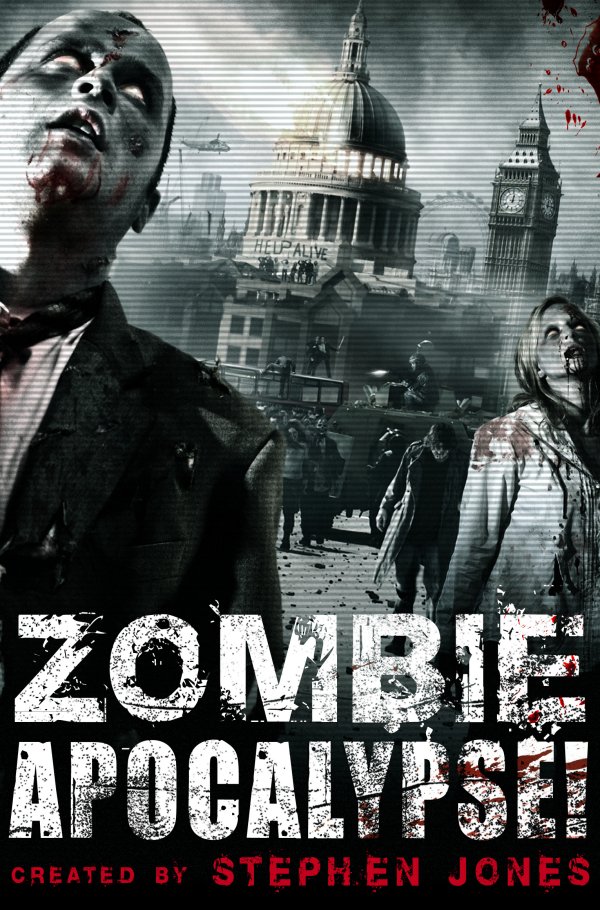
There's an interesting thread on the Ramsey Campbell Boards about a new zombie anthology that's coming out soon Zombie Apocalypse edited by Stephen Jones for Robinson Books (part of their mammoth series, I think). There is a basic premise upon which a number of writers, including John Probert and Mark Samuels, have written stories. In the thread about this book, Joel Lane puts forward the suggestion that zombies represent for some people "a hated and feared 'common herd'".


Going off most films I have seen this would seem to be correct. And, although I have not read many zombie novels, this would again seem true for them as well. Oddly, though, my own most recent zombie story - the first I have actually written as such - doesn't involve them en masse, but in a one to one basis. To me, it's a bit like the Alien movies. The first had the most tension and fear and only involved one creature. Aliens and its sequels, though good fun in different ways, were SF adventure films, in which there were far more aliens but the more there were the easier they seemed to kill and the less frightening they were individually. While undoubtedly the idea of a mob of zombies is a scary concept and something I'm sure none of us would like to see in real life, there is still much to be said for one person facing the threat of a solitary creature. What, then, does that represent? 


To be honest, I haven't a clue, other than a frightening concept. Which, before we go all allegorical, is what it must succeed at first before anything else. The rest is just icing on the cake. Slightly mouldy, blood-splattered icing at that. 


The zombie story I wrote is Romero's Children and will appear in The Seventh Black Book of Horror later this year.

Friday, 20 August 2010

Leisure Books in Trouble

More bad news from the States where it looks like Leisure Books, who have published some really splendid horror novels over the past umpteen years, are in desperate trouble.

Check out this link to Brian Keene's website, where he discusses this.

More on the Small Presses and Wordsworth Books

There's been quite a bit more on this ongoing discussion on the Vault of Evil, and some good points are being raised on it.

This is from one of my own last entries in the debate:


Today at 6:13am, jamesdoig wrote:

I imagine choosing a title for publication must be the product of a careful business decision. Derek mentioned, and I hope I'm not misquoting, that in recent times some Wordsworth titles haven't sold so well. There must come a time when you've exhausted the choicest crop of quality authors and titles and you struggle to sell the 2nd or 3rd tier stuff. I imagine Lovecraft, M.R. James, Robert E. Howard, le Fanu, Dickens, Conan Doyle, Kipling do all right - they always have - but it must be difficult to sell 1000s of copies of Lettice Galbraith, R. Murray Gilchrist and Amyas Northcote, as desirable as they may be to aficionados and fans. Even the specialty presses struggle to flog 500 or even 200 copies of long-dead authors who on the face of it look worthwhile reprinting - a saturation point is easily reached.

And the digitisation of public domain material must make it tough to sell print copies of out-of-copyright material - many of the texts are freely available and the only value-add is a decent intro or critical apparatus. I know a few researchers/editors who are struggling to sell collections by interesting authors, or have sold them and seen them published, but haven't received a brass razoo.


Which is why I think there are grounds to believe that a company based on this model, but selling up and coming newer writers whose names can be promoted online and elsewhere, but offering otherwise very small financial returns for the author (who would otherwise never even get their collection published, certainly in large numbers, lets be honest) might have a chance.

On the plus side for the writer, besides getting published and a higher profile, they could very possibly, even on low royaltiy percentages, end up with more than they would through traditional small presses.

Going on from others' comments, including Craig, about slow sales returns, this would have to be taken into account of course. The money spent on any publication would have to be regarded as shelved for quite some time. The important issue is how much it would cost to put out a collection of 2 or 3 thousand copies (or whatever) of a particular writer, taking into consideration all the cost cutting that could be involved.

Obviously it would be important to choose writers whose work could be attractive to as wide a range of the buying public as possible, with quality work that is readable and interesting.

There are a lot of things to weigh up on this.

I am going to make some enquiries into printing costs. If anyone has some already or some useful contacts I'd appreciate it.

Thursday, 19 August 2010

Moonlight - No Series 2

Now, I'm not a big fan of the newfangled vampires who twinkle and don't scare people or do evil things. Twilight can stay in the twilight for all I care. But I did get into Moonlight. I can't say why. Perhaps it was the main characters or the storylines. I know when one main character was abducted, then killed quite randomly, I was shocked - and  impressed. Whatever the reasons may be, I did enjoy this series and was looking forward to its return with a second. Unfortunately, this never happened. The show was cancelled. Which is a damn shame. There are few enough good programs on TV these days.

At least I can rewatch my DVDs of the first series.

Small Presses and Wordsworth Books

There's an interesting thread just started on the Vault of Evil. Although it began as a discussion about the latest issue of Prism, it very soon moved on to that marvellous publisher, Wordsworth, who have brought out some of the very best collections of single-author ghost stories at unbelievably cheap rates. They specialise, of course, in publishing writers who have been dead so long their works are now out of copyright. This naturally saves them any royalty payments. It also means that we, the reader, can read some brilliant stories only available elsewhere in very expensive limited editions from speciality publishers.

Mark Samuels tried to interest them in moving on to publishing a single-author collection by him, even though he offered it to them "dirt cheap". In his own words, though, he was shot down in flames. That's a great pity as I believe there are a number of outstandingly good modern writers in the genre who would be prepared to have collections of their stories published by someone like Wordsworth with very little expectation of much in return, just so long as their stories were made available at reasonable rates to a wider audience. After all, what do any of us make out of the very limited print runs offered by the small presses most of us are published by? Little, if anything is the answer of course.

It would be nice if someone like Wordsworth could be enticed into experimentng down these lines. I am not optimistic, though. And the limited print runs in the low hundreds (or less) at high prices will remain the only option available to most of us for short story collections.

Wednesday, 18 August 2010

Prism - September Issue Sent to the Printers

The next issue of Prism has been posted to the printers today, so it should be available for distribution to members by early September, well before FantasyCon.

One bit of good news is that the print run has gone up by 50 copies since the last issue, which shows that the BFS is doing okay at the moment. Let's hope its membership continues to climb. Of course, one important job to ensure that this happens isn't only by gaining new members but by ensuring that existing ones renew their membership. For that we need quality publications that continue to be published regularly, on time and without fail (which has happened all this year); that we keep up a steady presence online with an interesting and continually updated website (which is certainly happening); and by making sure that members don't fall by the wayside through neglect. We need to make sure that reminders - not one, but several - are sent out to members when their subscriptions need renewing. It's all too easy for people to forget to do these things.

I'm looking forward to this year's FantasyCon in Nottingham. It will be the first I've attended for several years.

Tuesday, 17 August 2010

A Fascinating Interview with Jonathan Maberry

On Strange Horizons there's a really fascinating interview with horror author Jonathan Maberry, discussing zombie fiction.

Hellfire and Damnation by Connie Corcoran Wilson

A very nice, slim collection of short stories (114 pages) published by Sam's Dot Publishing in the States. I received a signed copy in the post from the author as a member of the HWA. It has a very complimentary introduction by William F. Nolan - which is quite something - and some good and lengthy comments on the back cover from the likes of Gary A. Braunbeck and Lisa Mannetti. And I must admit I'm not surprised. This is a very good book, excellently well written, which moves at a brisk pace and never bores. Some intriguing ideas in it too. Enjoyed it.

Monday, 16 August 2010

Bloody Barbarity - Couple Stoned to Death

The Taliban showed its true face in Afghanistan when it arranged the stoning to death of a young couple in an area they controlled. Barbarities like this are an utter disgrace. If this is Sharia Law, it has no place anywhere in the world - least of all in the West, as some would have it.

Self Publishing and E-Books

There is quite a lively debate on the BFS Forum over the small press, self publishing, etc.

One excellent idea put forward was the suggestion that an ideal array of formats for a book to be brought out in the small presses would be a limited hardback edition for collectors (or keen fans of the writer) of 100-150 numbered copies, and a paperback version published via POD, which will therefore be available constantly at a reasonable price, topped off with a e-book version. Using the same cover artwork, etc., this would reduce the overall costs and at least make the book as fully available as possible.

The discussion has now gone on to the issue of distribution and sales - an important matter for anyone spending serious money. And there's no doubt but that this does demand serious work by anyone concerned, including the writer.