Showing posts with label Hellnotes. Show all posts

Friday, 7 April 2017

Enthusiastic review of Shades: Tales of Supernatural Horror by Joseph Rubas on hellnotes

There's a great review for Joseph Rubas's collection Shades: Tales of Supernatural Horror on the hellnotes website (Journalstone):
"This an excellent book by an author who surprised me in a positive way. Joseph Rubas’ writing reads like that of an older, more seasoned professional even though he is pretty young guy. It feels a little like he is channeling the writers of the old horror pulps in the 22 stories that make up Shades. Think of a young Richard Matheson and early episodes of The Twilight Zone and you’ll have the vibe. Good stuff!"
To read the full review go to:
http://hellnotes.com/shades-book-review/

Friday, 5 February 2016

Kitchen Sink Gothic gets great review on Hellnotes

Stuart Conover gave Kitchen Sink Gothic a great review recently on the Hellnotes website.

"In Kitchen Sink Gothic, David and Linden Riley have put together a dark and gritty horror- and humor-filled anthology which was an absolute blast to read. In its pages there are 17 stories with a Gothic tint to them which focus primarily on the working class. It is a twisted mix of tales that if you were to read the descriptions one by one wouldn’t seem to fit together and yet the Riley’s have proven they know exactly which story works with the next.
While not every story is a gem, there isn’t a single failure in this book that makes me feel any of my time was wasted. As long as you’re in the mood for the strange and insane, that is.
An interesting line up with some names you’ll probably recognize if you read a lot of horror and speculative fiction as well as some that you won’t. The table of contents includes:
“Daddy Giggles” by Stephen Bacon, “1964” by Franklin Marsh, “Derek and the Sun-Spots” by Andrew Darlington, “Black Sheep” by Gary Fry, “Jamal Comes Home” by Benedict J. Jones, “Waiting” by Kate Farrell, “Lilly Finds a Place to Stay” by Charles Black, “The Mutant’s Cry” by David A. Sutton, “The Sanitation Solution” by Walter Gascoigne, “Up and Out of Here” by Mark Patrick Lynch, “Late Shift” by Adrian Cole, “The Great Estate” by Shaun Avery, “Nine Tenths” by Jay Eales, “Envelopes” by Craig Herbertson, “Tunnel Vision” by Tim Major, “Life is Precious” by M. J. Wesolowski, and closes out with “Canvey Island Baby” by David Turnbull.
The more interesting reads for me included “Lilly Finds a New Place to Stay” which revolves around Lilly….finding a new place to stay. Only, things aren’t ever quite that simple now are they? Next up is “The Sanitation Solution” where one man’s bitter war with his ex makes for quite the disgusting read. Finally, in “Envelopes” we’re given a different look into the world of the occult."

Thursday, 23 July 2015

His Own Mad Demons reviewed on Hellnotes

There's a great review for my re-issued collection His Own Mad Demons on hellnotes by Marvin P. Vernon, even if it does use the wrong cover (it's the one for the Hazardous Press version rather than the Parallel Universe one that has replaced it). This is the correct cover:


His Own Mad Demons – Book Review

posted by
his-own-mad-demons-david-a-rileyHis Own Mad Demons
David A. Riley
Parallel Universe Publications
April 13th, 2015
Reviewed by Marvin P. Vernon
The central theme of the five stories in David A. Riley‘s original collection titled His Own Mad Demons is of the occult and demonology. Some of them take place around a British pub called The Potter’s Wheel and near an area named Grudge’s End. I have always liked that move when the author place their tales around a region whether it is real or fictitious. It gives it color and a continuity that helps create an aura of familiarity once you have the “feel” of the area in your head. And as is often with writers of fantasy and horror, they usually drop you in a place you would not necessarily want to visit and most certainly not spend the night.
I like Riley’s style. It is a little old fashioned and sort of Twilight Zone in character; putting ordinary people in supernatural situations that will tax their beliefs and challenge their will to live.
The title story is typical. It involves a couple of low level crooks doing a job that turns bad and quickly takes an occult turn in what first seems like a standard crime tale. It has a nice twist at the end and a satisfying shudder-inducing climax.
The second story titled “Lock-In” has a nice otherworldly feel, as regulars of The Potter’s Wheel become isolated for days in the pub, unable to leave into a pitch black darkness that dissolves them like acid if touched. This one has some nice shades of Hodgson and Machen to it but is still thoroughly modern.
“The Fragile Mask on His Face” also takes place around The Potter’s Wheel but is the weakest of the five. It involves a missing girl and doesn’t really go beyond the creepy occult killer (or is it something else?) stage.
The last two, “The True Spirit” and “The Worst of All Possible Places,” are the strongest pieces of fiction in the collection. They seem to speak to the writer’s strength of creating a believable fictional region with a mysterious past that includes an evil event and creating characters that will be believably tossed into the chaos. I enjoyed both of these stories but “The True Spirit” really left me in the mood to discover more about the strange town called Grudge’s End.
All of the stories kept my interest and all gave me a satisfying chill at the end. For this type of tale you really cannot ask for much else. They are the epitome of a “brief scare” and the occult horror story. Overall, it is a recommended “keep the lights on while reading” experience.

Tuesday, 6 January 2015

Three of my hellnotes reviews reprinted in Dark Discoveries magazine in 2014

Having just found out about the latest, I now realise three of my hellnotes book reviews in 2014 were reprinted in Dark Discoveries Magazine, which is a personal record.

These are:

Queen of the Dead: Zombie Ascension II by Vincenzo Bilof

Herbert Manning's Psychic Circus and Other Dark Tales by David Williamson

McFall by Scott Nicholson


Monday, 21 July 2014

Great Review for The Return on Hellnotes

There was a great review for my horror novel The Return on Hellnotes.

http://davidandrewriley.blogspot.co.uk/p/into-dark-novel.html
The Return
David A. Riley
Blood Bound Books (November, 2013)
ISBN 978-1940250052
$12.99 PB; $2.99 Kindle
272 pp
Reviewed by David T. Wilbanks
Gary Morgan is a tough-as-nails London gangster as well as the lead character in David A. Riley’s novel The Return. After participating in a gangland shooting, with plans to hide out in his long-neglected hometown of Edgebottom, Gary soon discovers that the mill town’s bad reputation hasn’t improved at all over the years; in fact, strange occurrences are on the rise and he finds himself caught in a situation that gets more bizarre the longer he hangs around. So, with full intentions of leaving town and lying low somewhere less threatening, he instead finds himself slipping further and further toward the dreary town’s evil heart.
The creepy artwork by Andrej Bartulovic on the book’s cover broadcasts where this one is heading. Anyone with a craving for bleak crime fiction crossed with the Lovecraftian/occult should enjoy this well-crafted work of looming darkness. Compellingly, the novel follows Gary and the local police as they experience what turns out to be otherworldly mayhem. Pure malevolence, revealed slowly with hair-raising detail, will keep horror fans riveted as they turn pages toward the chilling and merciless conclusion. Celebrated British author David A. Riley has been in the business of writing horror, fantasy and science fiction for several decades now and this storytelling experience is reflected in his work.  The Return is a grim, bloody book set firmly in the UK horror tradition, and will make a fine addition to any collection.

Friday, 6 June 2014

Queen of the Dead: Zombie Ascension II - book review

This is my review of Queen of the Dead which is now live on hellnotes.

Queen of the Dead: Zombie Ascension II
Vincenzo Bilof
Severed Press 2013
ISBN 978-1925047202
Paperback 284 pages $12.75
Reviewed by David A. Riley
To be honest I didn’t find this an easy book to get into with regard the characters. I don’t mind having anti-heroes as the main protagonists, but there are anti-heroes and anti-heroes, and for the most part I didn’t really care for many of the people in this novel, most of whom seem to be sociopaths to one degree or another, with little or no concern about the welfare of anyone other than themselves – or, if they have, for very few, usually one. There are a few exceptions, but they are a minority. Perhaps that would be a requirement to survive in such a world, though. It probably is.
That said, the graphic horror of the situation in which they are trapped, a global apocalypse of zombies ripping apart the fabric of society and the bodies of their victims, is vividly described – sometimes, it should be added, with maybe a tad too much concern for literary turns of phrase, which only serve to remind you that you are reading a book. Even so, the descriptions are vivid, the characters quickly and memorably drawn, and the speed with which events unfold truly breathtaking.
This is the second volume in a trilogy. Not having read the first, I was at a disadvantage to start with, though I was soon able to catch up with what was going on. That says a lot for the writer. Not only did I quickly catch up with things, but in a way that avoided long pieces of exposition. At no point did the pace slacken.
Despite almost a glut of books, movies and TV series over recent years zombies are still popular. If everyone could strike the originality of Vincenzo Bilof in his depiction of what would happen in such a catastrophe, there is no doubt in my mind that there is still a lot of life in the trope yet. It may not be a pleasant ride, but Bilof has certainly provided us with one hell of an exciting one in this book.

Thursday, 8 May 2014

Dark Discoveries Review

I was very pleased to receive a small payment via PayPal from Journalstone for a Hellnotes review I did earlier this year that's reprinted in Dark Discoveries #27.

The review was for Herbert Manning's Psychic Circus and Other Dark Tales by British writer David Williamson. The book is published by Hazardous Press.


Sunday, 9 February 2014

Herbert Manning's Psychic Circus and Other Dark Tales by David Williamson


See Hellnotes.

Herbert Manning’s Psychic Circus and Other Dark Tales
By David Williamson
Hazardous Press
ISBN: 978-0-615906836
December, 2013; £4.27/$6.29 pb; £1.88/$3.09 ebook
97 pages

David Williamson’s first story appeared in the Twenty-eighth Pan Book of Horror. The 30th volume saw an impressive three more tales - which I think must have made it inevitable that many years later he would become a regular contributor to that modern incarnation of the legendary series, with stories in the 5th, 6th, 7th, 8th and 9th volumes of the Black Books of Horror (Mortbury Press). He has also been published by Hersham Horror (Alt-Zombie).

Perhaps more than any other writer I can think of David Williamson’s wickedly nasty tales fit in perfectly with the style of the later Pans. Although there may be little of the supernatural in most of them, they are full of all too human evil, with some of the most truly horrible sets of characters you could ever hope to find.

Like a very British Robert Bloch, Williamson is a master of the twist in the tail. A Night to Remember features one of Williamson’s regular types of characters: vengeful, even sadistic offspring. It is easy in this story to understand why the narrator hates his parents so much – or can we? Just how reliable a narrator is he? In any event, what happens to his parents is Grand Guignol at its bloodiest. The title character of The Chameleon Man is able to mimic every hideous disease known to man. Yet has he gone one step too far when he is goaded into trying to mimic death itself? In The Switch we have a story that reminds me so much of EC Comics I could visualize it in graphic form. It has also one of Williamson’s best twists. Matrimonial hatred, murder, revenge – favourite themes of the later Pan Horrors – are the major elements of Rest in Pieces in which a husband thinks he has found the perfect way to dispose of his hated wife, while Boys Will Be Boys has yet another bloody offspring whose actions are definitely not for anyone with a weak stomach! Blind Date, reprinted from Alt-Zombie, is one of the few supernatural stories in this collection, a zombie tale with a neat twist. The final story, the titular Herbert Manning’s Psychic Circus, has a circus owner facing ruin in today’s PC-ridden, health and safety obsessed world who is made an offer he can’t possibly afford to refuse by a mysterious stranger, though he fails to realize the full implications till far too late.

These are strong short stories, graphically told, with minimal subtlety. If you like your horror full in your face, these are definitely for you.

Sunday, 2 February 2014

Great review for The Lurkers in the Abyss on hellnotes

I was amazed to see a stunningly great review for my collection The Lurkers in the Abyss & Other Tales of Terror on hellnotes.

Two quotes from it:

"The universe that Riley presents is not a forgiving one.  Like Lovecraft, Riley’s early influence, his universe does not care about you nor is it concerned with whether you are a ‘good’ or ‘bad’ person or even what could be considered ‘fair’ in life.  Many of the main characters in Riley’s fiction are people who are simply going about their regular lives until something happens and suddenly they have been marked by darkness."


"In the introduction, David A. Sutton characterizes Riley’s stories as “urban horror” and there is plenty of that here but there is also something more.  Something that, like the work of Ramsey Campbell, is out of synch with the rest of reality.  Even more, with Riley’s fiction, you are left with the feeling that you yourself, at any time, doing the most mundane acts, could be consumed by darkness."

To read the full review follow this link.

http://hellnotes.com/the-lurkers-in-the-abyss-and-other-tales-of-terror-book-review

Friday, 3 January 2014

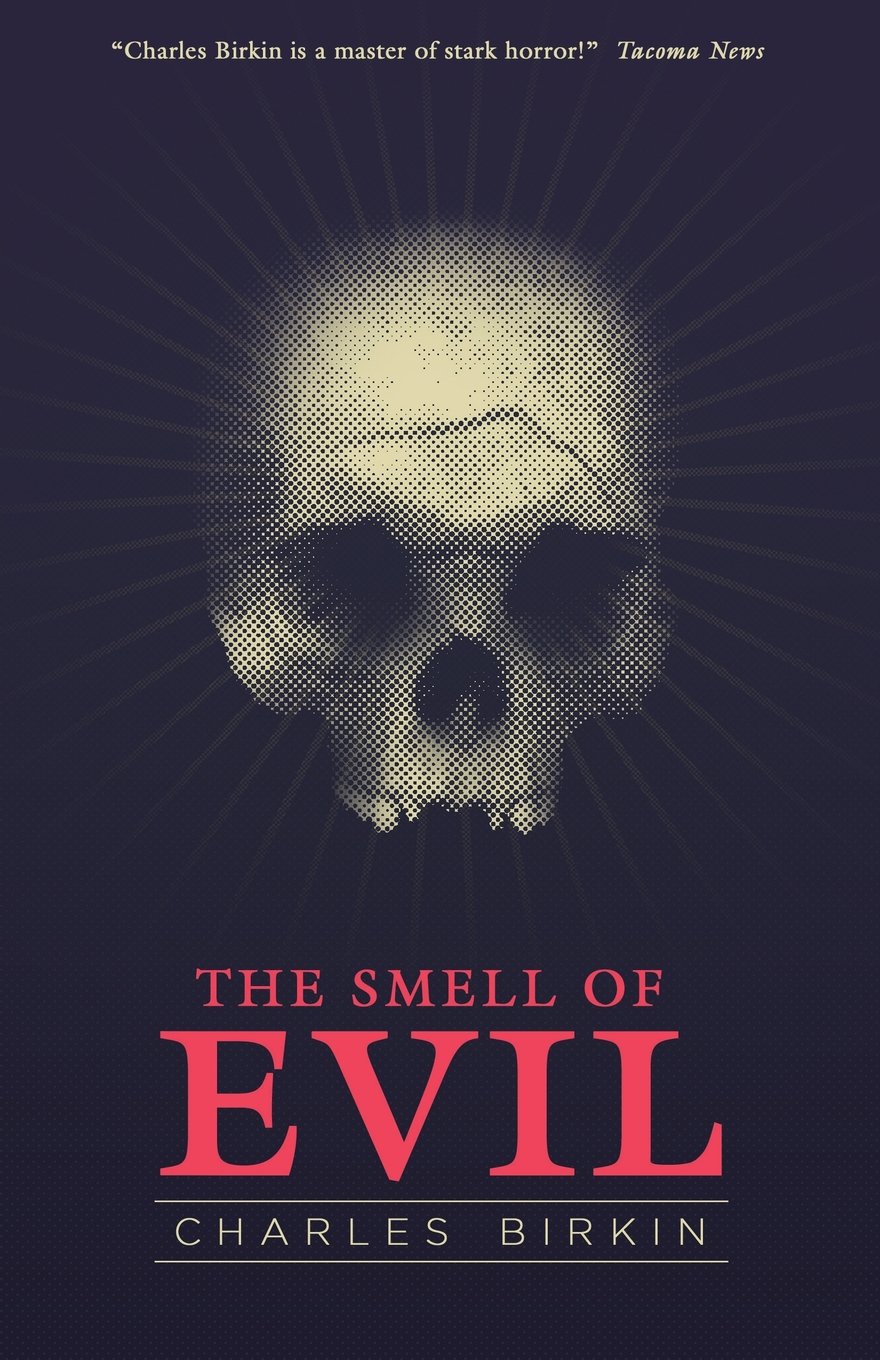
The Smell of Evil by Charles Birkin


by Charles Birkin
Published by Valancourt Books
ISBN: 976-1-939140-74-6
December 2013, £11.99 PB

Dennis Wheatley is quoted on the back cover as stating “More than a definite touch of the great master, Edgar Allan Poe.”  Well intentioned though that comparison may have been, it is totally misleading. Birkin’s style is as far from Poe’s as it could possibly be. You’ll rarely find anything approaching the Gothic horror’s of Poe within the dark tales of human evil in Birkin’s stories. Invariably set within the contemporary world the characters in these thirteen tales are firmly based on reality, whether they be self-deceived German gardeners working within the shadow of Second World War concentration camps or young tearaways escaping from a race riot in 1960s London, the horrors within these stories are of man’s (or woman’s) own making.

With an elegant writing style, Birkin shows his complete mastery of the conte cruel, leading the reader on to some of the most sadistic climaxes in literature. He rarely uses the supernatural, though when he does, as in “Little Boy Blue”, he is as proficient in this as in his more usual kind of story.

Born in 1907, Charles Birkin (later Sir Charles Birkin) had a long literary career, editing the Creeps series for Philip Allan in the 1930s, as well as an inaugural collection of his own stories, Devil’s Spawn (1936), before laying his writing to one side during the Second World War when he served in the Sherwood Foresters. Many of his most infamous stories stem from his experiences towards and just after the end of the war when he witnessed first hand what men were really capable of doing. It was not till the 1960s, though, that he began writing again with the encouragement of his friend, Wheatley. The Smell of Evil was the first of seven collections published during that decade, culminating in Spawn of Satan in 1970. After living in Cyprus for several years he died in the Isle of Man in 1985.

Long out of print, other than for several hard cover, now collectible volumes from Midnight House, it is wonderful  to see Valancourt Books at last bringing an easily affordable collection to a new reading public. It would be even more wonderful if over the next few years the rest of Birkin’s collections are brought back into print.

This volume is rounded out with an insightful introduction by John Llewellyn Probert.

Wednesday, 18 December 2013

McFall by Scott Nicholson

My review of this book on Hellnotes.

 
McFall
by Scott Nicholson
Published by 47North
ISBN: 978-1477849231

This is a sequel to Drummer Boy and The Red Church, though if like me you have not read either you can still enjoy this book.

A member of the villainous family that plagued the previous novels, the McFall of the title has come to claim the land that belongs to him. But Larkin McFall is different to his predecessors, subtle, suave, a property developer who draws people to him through the promise of work and big profits. The infamous Red Church, in which his predecessor worked so much evil, he has destroyed by fire to make way for a high class development - though what is found within its burned out embers gives a dark glimpse that all is not as he makes it out to be.

Behind all the bon homie and the modern aspects of his wealth and power, lurks an ancient evil, well hidden by his designer clothes and his apparent desire to help people out. The local sheriff, nearing retirement and still raw from what happened years ago when a different McFall lived locally, is certain about this, even though he can't prove it. But bodies turn up and ghosts from the past are never very far away.

The main protagonists, looking forward to college, are Ronnie Day and Bobby Eldreth, best friends through thick and thin. Ronnie has a reputation for finding dead bodies - a reputation he would rather do without - while Bobby shines as the star baseball player for their high school team with hopes of turning professional if he is lucky enough to be spotted by a scout from a major team. Little by little, Larkin McFall comes into their lives, manipulating them both in what he likes to call a game within a game. Ronnie tries to resist, but he is outclassed. Bobbie, dogged by an over-ambitious father who sees him as a meal ticket to a better life, is easier prey.

This is an engrossing novel, with a fine cast of well developed characters, set within a realistic milleau. The sinister developments are skilfully introduced with cumulative ease as McFall spins his spider's web around  the township.

This is a first class thriller, whose supernatural elements are never crudely overdone. Deaths, intrigues, and betrayals, all play their part in a story that quickly sucks you in with consummate ease. A thoroughly modern, thoroughly intriguing horror novel.

Thursday, 5 December 2013

Another great review for Dark Visions 1

Hellnotes have just published another great review for Dark Visions 1 from Grey Matter Press, edited by Anthony Rivera and Sharon Lawson. My own story Scrap came in for some pleasing praise: "David A. Riley’s “Scrap,” concerns two brothers living in England who have been abused at the hands of those who should be caring for them. What they see as a new opportunity to turn their lives around turns out to be anything but. David lures readers into the plot and shocks with the greatest of ease."

Whew!


Wednesday, 20 November 2013

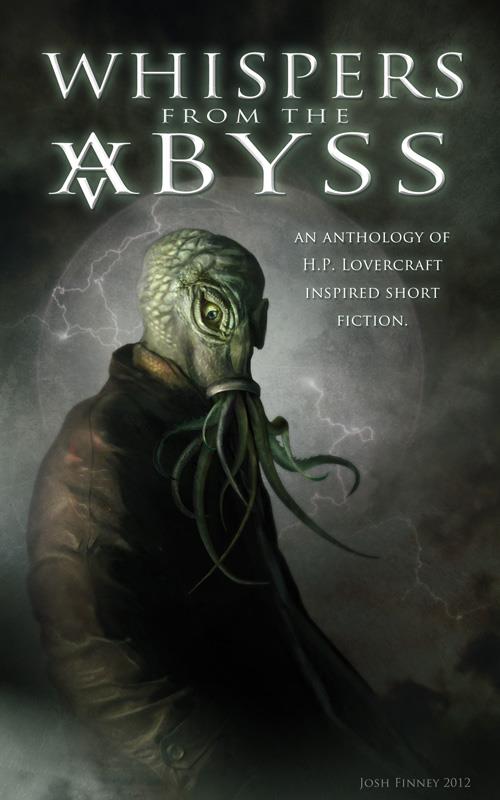
Whispers from the Abyss - Book Review


A collection of H. P. Lovecraft inspired short fiction
Edited by Kat Rocha
Cover by Josh Finney
ebook

Lovecraft has never been more popular, and there seem to be more books inspired by his tales out today than ever before. This anthology, edited by Kat Rocha, contains 33 stories by many writers unknown to me, but a few I am familiar with, like Nick Mamatas, Charles Black, and Aaron J. French.

My first fear was that with so many stories there would be a repetition of theme and style, but that was quickly dispelled. Though most are quite short, they are refreshingly wide ranging. If there is a frequent theme it may be the use of Lovecraft’s Deep Ones, but even here the approach to this trope is broad. Jason Andrew’s “Fear And Loathing In Innsmouth: Richard Nixon’s Revenge” is perhaps the most original. Written as if by Hunter S. Thompson, it follows the Gonzo journalist during the presidential election towards Innsmouth and the source of Nixon’s campaign money. Visiting the Arkham Asylum the narrator has this to say about one of the residents. “He had thick jowls, bulbous eyes, and a suspiciously Nixon-like jump nose. I made certain that he was always two steps ahead of me and always in my line of sight.” A great story, totally in keeping with the character of its narrator.

Charles Black contributes two stories, one of which must be a contender for the shortest horror story ever written. Called “The Last Tweet” it is exactly what it says, a tweet. Incredibly Black manages to encapsulate an entire short story into 19 words, and even manages to use an old cliché of many bad Lovecraftian pastiches – which for once makes sense and works. About this I am saying no more. Read it for yourself. It won’t take you long.

Nick Mamatas’s “Hideous Interview With Brief Man” is a bizarre interrogation, whose true horror only materialises in the final few sentences.

“My Stalk” by Aaron J. French turns for inspiration towards Lovecraft’s fantasy writings, though written in its own style, which is both fluid and almost hypnotic.

There are too many stories to highlight more than a few, but I failed to find any that was not well written and distinctively individual. If I had one complaint it could be the preponderance of first person narratives, but that may be because I have a preference for the third person singular. Not a serious defect, and one which most readers may not even notice, especially if they tend to dip in and out of anthologies.

The book has a gorgeous cover by Josh Finney, whose beauty I would love to see in print one day rather than almost lost on my Kindle in black and white.

A great, engrossing and varied anthology of Lovecraftian fiction, I would recommend it to anyone who likes this type of story.

TABLE OF CONTENTS
Introduction by Alasdair Stuart
“Iden-Inshi” by Greg Stolze
“Pushing Back” by J.C. Hemphill
“Nation of Disease: The Rise & Fall of a Canadian Legend” by Jonathan Sharp
“When We Change” by Mason Ian Bundschuh
“Nutmeat” by Martin Hill Ortiz
“The Last Tweet” by Charles Black
“Secrets In Storage” by Tim Pratt & Greg Van Eekhout
“The Well” by Tim Jeffreys
“The Neon Morgue” by Nathan Wunner
“The Deep” by Corissa Baker
“Fear And Loathing In Innsmouth: Richard Nixon’s Revenge” by Jason Andrew
“My Friend Fishfinger By Daisy, Age 7″ by David Tallerman
“Chasing Sunset” by A.C. Wise
“The Thing With Onyx Eyes” by Stephen Brown
“I Do The Work Of The Bone Queen” by John R. Fultz
“Suck It Up, Get It Done” by Brandon Barrows
“The Substance In The Sound” by W.B. Stickel
“Stone City, Old As Immeasurable Time” by Kelda Crich
“Hideous Interview With Brief Man” by Nick Mamatas
“The Sea, Like Glass Unbroken” by Silvia Moreno-Garcia
“The Decorative Water Feature Of Nameless Dread” by James Brogden
“Henry” by Lance Axt
“My Stalk” by Aaron J. French
“Give Me That Old Time Religion” by Lee Finney
“Afraid Of Dobermans” by Chad Fifer
“Leviathan” by Nicholas Almand
“Horrorscope” by Charles Black
“The Jar Of Aten-Hor” by Kat Rocha
“The Floor” by Jeff Provine
“Waiting” by Dennis Detwiller
“Other People’s Houses” by Sarena Ulibarri
“You Will Never Be The Same” by Erica Satifka
“Death Wore Greasepaint” by Josh Finney

Saturday, 17 August 2013

Sacrifice by Paul Finch - review


My review for Paul Finch's new DS Heckenburg novel is now on hellnotes.

This is the second Detective Sergeant Heckenburg thriller from the hands of Paul Finch. The first, Stalkers, was published earlier this year to great applause. Thankfully, I can confirm that its sequel has more than lived up to expectations, with Heckenburg and the rest of the Serial Crimes Unit facing the challenge of a series of particularly sadistic murders based upon annual festivals. The first body is a man dressed in a Santa Clause outfit, who has been bricked up to starve to death in the days before Christmas. On Bonfire Night a man is burned to death. On Valentine’s Day a young couple are impaled by an aluminium arrow through their hearts. Worse murders are to follow, graphically described in Paul Finch’s clear, no nonsense style. Under pressure from the media, the Serial Crimes Unit are struggling with little solid information to go on even as it becomes clear that more than one killer must be responsible, especially after a horrifically grisly re-enactment of the crucifixion.
The descriptions of the towns across Britain in which the murders take place are vividly described in all their sordid detail and it’s obvious that Finch knows them and, in particular, their less salubrious areas well. Likewise, with his experience in the police, in which he served for some years, he has a first hand knowledge of low life criminals, which adds authenticity to the book. Both these, and a vivid imagination, honed in the horror genre for years, make this a crime novel which no horror fan will be disappointed with. The action scenes pack a hefty punch and are certain to set the adrenalin flowing, particularly towards its violent climax, when all hell lets loose.
Ending the book are the first thirty pages of the next Heckeburg novel, Hunted, as a taster.

Friday, 2 August 2013

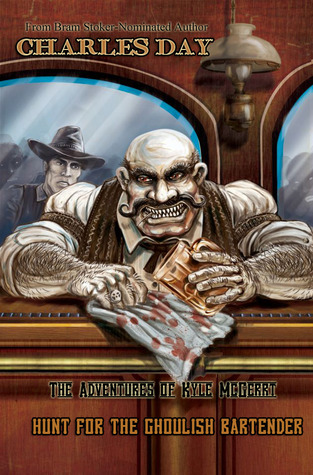
The Adventures of Kyle McGertt: Hunt for the Ghoulish Bartender - review


My review of The Adventures of Kyle McGertt: Hunt for the Ghoulish Bartender is up on Hellnotes.

This is the first YA novel I have ever read. It’s also the first horror Western I’ve read too. In both instances I had a pleasant surprise – I enjoyed it far more than I expected.
Charles Day has a very readable style and the action moves rapidly, though not at the expense of character and some vivid descriptions. The Ghoulish Bartender himself, though completely evil in his actions, is far more than a two-dimensional villain. He has a back story every bit as tragic as any of his victims – and an awareness of what he has irretrievably lost to become what he is – a fate that not chosen by him, but forced on him as a curse.
Nevertheless he has grandiose plans to spread the curse of the ghouls on every community he comes across. In this, only Kyle McGertt, inheriting the crusade of his dead father, can hope to stop him. Robustly violent, yet with some subtle humour, this short novel is the story of how these two opponents finally come confront each other for a final showdown.

Monday, 22 April 2013

The Daylight Gate by Jeanette Winterson

Hellnotes have just posted my review of Jeanette Winterson's The Daylight Gate:

In 1612 seven women and two men were executed at Gallows Hill, Lancaster Castle, as witches. It is an event made famous by the lawyer, Thomas Potts’ account of the trial in The Wonderfull Discoverie of Witches in the Countie of Lancaster and, later, by Harrison Ainsworth’s Gothic masterpiece The Lancashire Witches. The events were later related in Robert Neill’s 1951 historical romance, Mist over Pendle.
Living within site of the infamous hill, I know I should like this book more than I do. The author’s debut novel, Oranges Are Not the Only Fruit, won the Whitbread Prize for First Novel, while its dramatization on television won a BAFTA for Best Drama. Other books by Jeanette Winterson have won prizes too. She is a prominent name in literature. She was also brought up in my home town of Accrington, which is not far from the focal point of where the Lancashire Witches, whose story The Daylight Gate is about.
Although the book stands at over 200 pages in length, the typescript is so large I estimate it is probably less than 40,000 words, the bare minimum for a novel. The writing style is minimalist, too, so pared in fact that little has been left over to flesh out the various characters in it. Even though many suffer horrendous tortures typical for those times at the hands of the authorities, it is hard to feel much empathy for them, being little more than cardboard characters. Contrastingly, the tortures themselves are graphically described. As are the abuses suffered by the accused at the hands of their jailors.
The main characters are Alice Nutter and her lesbian lover, Elizabeth Southern, also known as Mother Demdike. Alone of those tried at Lancaster, Alice Nutter was a wealthy landowner and a respected member of the local gentry. In this novel, though, she is also portrayed as having once been a friend of Dr John Dee and, while she lived in London where she made her wealth, of having been involved with the occult. She is also portrayed as being the lover of a Jesuit priest, a dangerous liaison at a time when Catholicism was banned in England and priests were hunted down, tortured and executed, especially those who were involved in the failed Gunpowder Plot. These were violent times. Paranoid about the dangers of witchcraft, it is uncertain what was worst: being a Catholic or a witch. Both could be capital crimes.
Loosely based on true events, this should be a gripping story. Unfortunately, I couldn’t find myself as involved with the fates of the various characters as I should have been. It is a brisk read, but I can’t say I enjoyed the prose. That may be a question of taste and others may like it. Here is a short but typical example of it:
“Roger Nowell was a widower. Alice Nutter was a widow. They were both rich. They could have been a match. Alice’s land abutted Read Hall. But they had not courted; they had gone to law. Roger Nowell claimed a parcel of land as his. Alice Nutter claimed it as hers. She had won the lawsuit. Roger Nowell had never lost anything before – except his wife.”
Having said this, the story is intriguing and I can see how it would maybe make an excellent film at the hands of a company such as Hammer. As a novel, though, it left me far from as enthralled as I had hoped to be.

Thursday, 18 April 2013

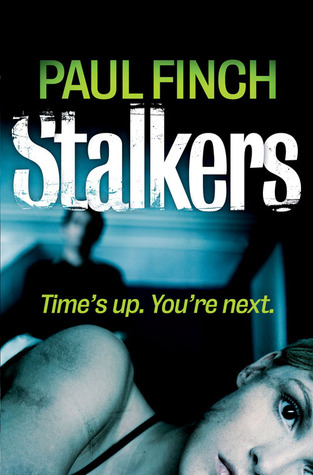
Stalkers by Paul Finch


This is my review on Hellnotes of Stalkers by Paul Finch:

"Stalkers
By Paul Finch
Avon Books (HarperCollins)
ISBN: 978-0-00-749229-9
Paperback: 452 pages, £6.99
2013
Paul Finch’s name will be familiar to horror enthusiasts for his numerous short stories in The Black Books of Horror, or in his collections, Walkers in the Dark (Ash-Tree Press), Stains (Gray Friar Press), Groaning Shadows (Gray Friar Press), Enemies at the Door (Gray Friar Press) and his historical horror novels, Medi-Evil, volumes 1, 2 and 3.
This is his first mass market paperback, a crime thriller with more than a touch of horror. Indeed, some of the things that happen in Stalkers would not be out of place in any anthology of horror stories. This is real horror, though, the kind that not only can happen but, nightmarishly, does.
Stalkers introduces us to Detective Sergeant Mark “Heck” Heckenberg, late of Manchester, now stationed in London as part of the Serial Crime unit. An obsessive workaholic, Heck has convinced himself that the disappearance across Britain of over thirty successful, often professional, women with no reason to abandon their families, are connected. His superiors, though, are unconvinced. Almost burned out and in bad favour, Heck is forced to take three months leave. His boss, Detective Superintendent Gemma Piper, with whom he had a fling years ago, still has some faith in him and reluctantly agrees to let him use his leave as an opportunity to continue his investigations under deep cover. When he travels North to Salford to interview an ex-con who shared a prison cell with someone he thinks might have a connection with the disappearances, things suddenly start to get out of control. Unwittingly, rather than the lone predator he was expecting to uncover, Heck has stumbled on something far more dangerous, a professional gang, the “Nice Guys Club”, which will provide anyone perverted enough with whatever sexual thrills they want… for a price.
An ex-policeman, Finch’s description of police procedures are impeccable and add authenticity to the story as the violence notches up at an alarming rate. Struggling to stay within the boundaries to which he is expected to adhere as a serving policeman, Heck is gradually forced to go further than he would like, especially when it becomes obvious he can no longer rely on support from his colleagues, and has to go on the run for his life. The people he is up against are ruthless. Trained to kill, adept at torture, and merciless, they acknowledge no limits to what they are prepared to do to anyone who threatens them.
This is one of those novels which successfully blurs the boundaries between crime and horror and should satisfy enthusiasts of both. Finch has a grittily realistic, easy to read style. The pace is relentless. I found it hard to put down and, for all that Stalkers is over 400 pages long, it took me only a short time to get through it. Thankfully, another Heck novel, Sacrifice, the first chapters of which are included at the end as a taster, is due for publication in July.
From what I have read so far Heck will certainly become an iconic character.

Monday, 15 April 2013

The Whispering Horror by Eddy C. Bertin


This is my review of Eddy C. Bertin's collection of stories due from Shadow Publishing this May. The review is available on Hellnotes' website:

The Belgian writer Eddy C. Bertin’s stories have been appearing in anthologies since the late sixties, but this is his first English language collection. The title story, The Whispering Horror, originally appeared in The Ninth Pan Book of Horror Stories 1968. In Europe, though, under a number of pseudonyms, he has had over sixty pulp novels and serials, westerns, thrillers, and murder mysteries published. He has written mysteries and historical romances, and horror stories for children.
Here we have the cream of his tales, which range from the psychological to the supernatural. They even include the Cthulhu Mythos, though Bertin’s interpretation of this is distinctly his own.
One of my favourites must be The Whispering Horror, which was the first of his stories that I ever read many years ago. It has a dark, claustrophobic feel common to most of Bertin’s stories, and a shadowy horror which is malevolently evil. “And then… the thing WHISPERED. Not a moan or a groan, not a recognizable sound, but a thick, slimy whisper, which seemed to go on and on between the slippery walls. The whisper of something old and feeble, something slimy and swollen, which seemed dead and yet alive, as if it had just awakened from a long sleep. Something petrified and timeless, suddenly coming to itself.”
For me, excellent though the short stories are, my favourites are the longer ones. Dunwich Dreams, Dunwich Screams combines Lovecraft’s mythos with historical horror, blending the true events that befell England’s coastal town of the same name as Lovecraft’s blighted New England settlement. It interweavs two narratives, the holiday visit by a Belgian fan of Lovecraft, obviously Bertin himself, and the events that befell Dunwich during Henry VIII’s dissolution of the monasteries and his attacks against the clergy, including secret followers of Dagon. By contrast Something Small, Something Hungry follows a police investigation into a seemingly inexplicable series of fatal accidents at a circus. Even though no one else is ever involved with them – in one a trapeze artist closes her fists when she should have reached out to grasp the trapeze hurtling towards her and falls to her death – there are too many for them to be a coincidence. Told from a variety of viewpoints – the circus owner, a bestial clown, the policeman, and an old woman accused of being a witch – it soon becomes obvious that something none of them can see must be behind the accidents. The final twist, when the identity of the perpetrator is revealed, is even more shocking than anything that has gone before.
If one thing distinguishes Bertin’s stories, it’s the originality of their titles – A Taste of Rain and Darkness, Like Two White Spiders, The Man Who Collected Eyes, Whisper of Leathery Wings – but the final story, My Fingers Are Eating Me must rank as one of his most original. As in Dunwich Dreams, Dunwich Screams, the main protagonist is a visiting Belgian, a journalist on the lookout for unusual stories he can write for a magazine in Ghent about London in the early seventies. By accident he is witness to what he is at first certain is a mugging late one night on an all but deserted Underground station. Terrified at the savagery of the attack he flees to the surface, where he tries to tell the police, but when they return to the platform there is no trace of either a body or any of the blood he saw flowing from it. Unable to forget the incident, he travels the Underground obsessively until he finally sees the attacker again, a small beggar-like man who he starts to trail. At each revelation he discovers, he finds himself drawn into something much bigger and more terrifying than anything he could have possibly imagined, the cusp of an ancient Lovecraftian horror that encompasses the whole of the Underground. This story is a tour de force that never lets up, escalating in sheer horror up to the final twists in its climax.
A rich and varied collection of horror stories from a master of the genre. I sincerely hope that further collections of Bertin’s stories will appear in English in the not too distant future.


Monday, 1 April 2013

My Hellnotes review of Dead Earth: Sanctuary

My review of Dead Earth: Sanctuary by Mark Justice and David T. Wilbanks has just been posted on Hellnotes.


This is the third in the Dead Earth series and, though I have not read any of the previous books, I found it incredibly easy to catch up with what had gone before. So ably have the authors provided enough of the back story that this can easily read as a stand alone volume, though I admit, having finished it, I could certainly go back and read the earlier ones too!
As in any good zombie story, the undead are merely a backdrop, a raison d’etre for the situation in which the human characters have found themselves. Their life stories, fears, oddities, ambitions, prejudices, their all too human fallibilities are what the story is all about, and in this the authors succeed with deceptive ease, creating an interesting cast, from the meek, frightened cook, Nestor, to the psychotically damaged army bad ass, Salina, who for the first half of the book is the main villain, with her gang of deranged killers.
The main group with whom the book is concerned is headed by Jubal Slate from the earlier novels. They brush up against Salina’s gang and in the interplay of action that follows it becomes obvious that a deadly confrontation is almost certainly going to erupt between them – perhaps too obviously, as in this book nothing can be taken for granted, and villains one minute can become, if not perhaps heroes the next, certainly something less villainous, especially when pitted against enemies far worse than shambling zombies or sociopathic gang bangers.
It is a fast paced book and the dangers rarely let up for a paragraph. We are told that in the previous books the zombie threat was created by a race of invaders from another dimension known as the necros as a means to conquer the earth. This plan has already been thwarted by the time Dead Earth: Sanctuary begins, but the enemy has not given up yet. Instead they have sent a demonic creature to kill their chief enemy, Jubal Slate. Unaware of the threat, Jubal is leading the remnants of his group in search of what may be a mythical place called Sanctuary where, he has heard, there are no zombies and his people can live secure from danger. Even though he is still skeptical about it, it is nevertheless the best of all options open to them and, while handing en route the machinations of Salina and her gang and the threats from a deranged serial killer, not to mention the ever present zombie threat, Jubal takes his group to Sanctuary – which is when things become even more perilous for them all. The book surges on to some startling twists and an apocalyptic climax.
This is a thoroughly enjoyable novel with plenty of action and a cast of well drawn and, for the most part, sympathetic characters.

Monday, 25 March 2013

Whitstable by Stephen Volk


I have just had my first review posted on Hellnotes, a review of Stephen Volk's novella Whitstable.


I was uncertain how I would feel about a novella whose central character was Peter Cushing, especially one set during probably the darkest period of the actor’s life, immediately after the death of his wife, Helen, in 1971. It would take a writer of great sensitivity to create a story that could cover this period without veering dangerously towards the utterly tasteless or maudlin. Happily, Stephen Volk has proven with this book to have been more than up to the task, and has created not only a gripping story but a vivid vignette about one of Britain best loved actors, full of fascinating and credible details and insights.
For obvious reasons it is for the most part a book about sadness. It is no secret that Cushing was crushed by his wife’s death. Not only were they close as husband and wife but she was his spiritual partner too. He relied upon her tremendously. Once she had gone he felt directionless, his life all but pointless and, if not for his strong Christian faith and the certainty he would eventually rejoin his wife in the afterlife, may have been tempted towards suicide.
Weighed down with an overwhelming feeling of hopelessness, a chance encounter with an eleven year old boy gives him a sudden sense of purpose. Mistaking the actor for the real Van Helsing, whom the boy had seen at the cinema in Dracula, he pleads with him to help fight what he sees as a real vampire. Of course, Cushing realises that the man, the boy’s step-father-to-be, is not a vampire at all but something just as traumatic, a real life monster. Volk’s intermixing of this fictitious tale with the coming to terms of Cushing’s loss is brilliantly well written.
While there is no visceral violence there is a growing sense of menace. Worse, though feeling old and fragile, having lost three stones in weight during his wife’s illness, the actor seems barely able to cope with his own problems, never mind those of the boy, even though he feels obligated to help him in any way he can.
There are some fascinating details about Cushing’s relationship with Hammer and film-making in general. And the final confrontation with the abusive “step-father” in an empty cinema which is playing the only recently released The Vampire Lovers, some of whose scenes show a symbolic synchronicity with real life, is masterly.
Whitstable is obviously a labour of love, by a writer who feels genuine affection for its subject. It is also a book written by someone who knows his subject well, not only through research perhaps but because Stephen Volk has had direct experience in the creation of TV programs and films (Ghostwatch, Afterlife, The Awakening, to mention but three). The book works also as a tense thriller and has moments of intensity, particularly in Cushing’s face to face confrontations with the much stronger, younger and vicious abuser.