Things are moving along quite smoothly for the publication of my short story collection in October by Shadow Publishing. Cover artwork has been commission by Dave Sutton for my artist of choice, Paul Mudie, whose fantastic paintings have graced the covers of all the Black Books of Horror.
After some discussion it now looks as if Paul will be basing his painting on my story Fish-Eye, which is possibly the most Lovecraftian one in the book (it was first published in the Lovecraft eZine) with my own turn on the Deep Ones.

Thursday, 30 May 2013


Wednesday, 29 May 2013
The Unspoken edited by William Meikle - my review

Although this is a charity anthology, don't be misled into thinking any of the stories are castoffs. From writers like Tim Lebbon, Simon Kurt Unsworth, Steven Savile, Steve Lockley, John Shirley, Anna Taborska, Stephen James Price, Scott Nicholson, Stephen Laws, Nancy Kilpatrick, Barbie Wilde, Johnny Mains, Guy N. Smith, Pete Crowther, Steve Duffy, William Meikle and Gary McMahon that just isn't going to happen. There isn't a second rate story here.
And, though cancer is an underlying theme, there is a great variety in what we are offered, from true physical horror, science fiction, fantasy, to psychological horror of a high order.
Indeed, for me the highlight of the collection is a psychological horror story. Photographs of Boden by Simon Kurt Unsworth is a gem that would shine out in any anthology. Boden's memories of himself, his character, his past history, are undermined as family photographs are corrupted by some unknown force. Or are they? In his memories it was always his sister who managed to spoil every family event with her selfishness, endlessly arguing and sulking over everything that didn't suit her own wishes. Subtly, though, their roles appear to be being reversed, not only now, but at every event that Boden can remember. Even his own memories become corrupted by this metamorphosis. It is a frightening story, undermining the past - and the present. It's a story that has lingered with me ever since.
Polyp by Barbie Wilde is another standout story. Crazy, gut wrenchingly horrible, it is one of the wackiest tales I have read in a long while.
Pete Crowther's Cankerman, on the other hand, is a story of loss and self sacrifice, and is touchingly poignant. The Cankerman is a horrific creation, genuinely the stuff of nightmares but sometimes the human spirit - and love - can face up to and challenge, if not totally defeat even the worst thing that can be thrown at us.
Johnny Mains is well known for his over the top horrors, often written with a blood-soaked tongue in his cheek. The Cure is surely one of his most horrible yet, a strange story of what could be described as medical malpractice taken to its nth degree. I can guarantee you won't forget this one easily.
Though these are my own particular favourites, there are plenty of others that are almost as good, which other readers would probably like even more.
All profits from this book will go to the Beatson Cancer Research Institute and I am proud to have a story of my own in it.
kindle edition UK
kindle edition USA
Tuesday, 21 May 2013
Cancer Charity Anthology The Unspoken edited by William Meikle
This charity anthology is available now via kindle for £2.88 at Amazon.co.uk and at Amazon.com
Contents are:
Ramsey Campbell – Introduction
Tim Lebbon – Just Breathe
Simon Kurt Unsworth – Photographs of Boden
Steven Savile & Steve Lockley – The Last Gift
John Shirley – Where the Market’s Hottest
Anna Taborska – Underbelly
Stephen James Price – Pages of Promises
Scott Nicholson – Heal Thyself
Stephen Laws – Harbinger
William Meikle – The Unfinished Basement
Nancy Kilpatrick – Alien Love
David A. Riley – A Girl, a Toad and a Cask
Barbie Wilde – Polyp
Johnny Mains – The Cure
Guy N Smith – The Big One
Pete Crowther – Cankerman
Steve Duffy – X for Henrietta
Gary McMahon – Bitter Soup
Edited by William Meikle
Cover art by Simon Marshall Jones
The book is being published by Karoshi Books, first as an ebook, followed by a POD paperback. All profits go to The Beatson Cancer Research Institute.
Sunday, 19 May 2013
Under the Knife edited by Kevin G. Bufton


Friday, 17 May 2013
Dark Discoveries

I'll be doing a review of the magazine later as soon as I have managed to read it, though at over 100 A4 pages that's going to take a couple of days.
Monday, 13 May 2013
Cancer Research Charity Anthology - The Unspoken edited by William Meikle
The cancer research charity anthology, The Unspoken, edited by William Meikle is finally, after a few ups and down, scheduled to be published in the near future by Karoshi Books, first of all as an ebook, followed by a POD paperback. All profits will go to The Beatson Cancer Research Institute.
The anthology includes:
- Ramsey Campbell - Introduction
- Tim Lebbon - Just Breathe
- Simon Kurt Unsworth - Photographs of Boden
- Steven Savile & Steve Lockley - The Last Gift
- John Shirley - Where the Market's Hottest
- Anna Taborska - Underbelly
- Stephen James Price - Pages of Promises
- Scott Nicholson - Heal Thyself
- Stephen Laws - Harbinger
- William Meikle - The Unfinished Basement
- Nancy Kilpatrick - Alien Love
- David A. Riley - A Girl, a Toad and a Cask
- Barbie Wilde - Polyp
- Johnny Mains - The Cure
- Guy N Smith - The Big One
- Pete Crowther - Cankerman
- Steve Duffy - X for Henrietta
- Gary McMahon - Bitter Soup
- Edited by William Meikle
- Cover art by Simon Marshall Jones
Tuesday, 30 April 2013
The Sorcerers - The Original Screenplay by John Burke
The Sorcerers, directed by Michael Reeves and starring Boris Karloff and Ian Ogilvy, has long been a favourite British horror movie of mine. Filmed in 1967 at the height of "flower power", this was set contrastingly in a dank, depressing suburb of London, capturing a mood of pessimism and boredom that may be out of kilter with the more fashionably seen mood of the time but was probably truer for most people then.
Now PS Publishing are bringing out The Sorcerers - The Original Screenplay by John Burke - edited by Johnny Mains.
 Introduction - Jean Burke
Introductory Essay - Dr Matthew Sweet
The Sorcerers Discord - Johnny Mains
Sorcerers Treatment - John Burke
Sorcerers Screenplay - John Burke
The Sorcerers Happening - Ben Halligan
Original DVD linear notes - Kim Newman
Michael Reeves Biography - Tony Earnshaw
Filmed on a tight, almost negligible budget, The Sorcerers was the second film directed by Reeves, who only made one more, Witchfinder General, before his early death.
Credits for the film have always been "Script by Michael Reeves and Tom Baker" based on an "idea by John Burke". Johnny Mains, who became close friends with John Burke in his final years, discovered, though, that these fail to reflect reality. Inside a plain cardboard box, John Burke showed him his early treatment for the film, plus the screenplay, headed:
When he read this, Johnny's astonished response was to exclaim: "And when the film came out your name was dropped from the screenplay credits and you were relegated to 'from an idea by'. John, do you realise how important this all is?"
Sadly, a few months later, John Burke died, but Johnny was sent the cardboard box by his son. He decided there and then to do something to set the record straight. There followed the mammoth task of tracking down people who would, importantly, give him permission to reprint copyrighted material pertaining to the film, and to bring together an assortment of articles by experts on the subject, including Dr Matthew Sweet, Ben Halligan, Kim Newman and Tony Earnshaw.
Having already been given the opportunity to see Dr Sweet's Introductory Essay and Johnny's The Sorcerers Discord I can say that this is going to be one barnstormer of a book, one that anyone interested in 1960s British cinema, particularly the horror genre, will want to read.
Now PS Publishing are bringing out The Sorcerers - The Original Screenplay by John Burke - edited by Johnny Mains.

Introductory Essay - Dr Matthew Sweet
The Sorcerers Discord - Johnny Mains
Sorcerers Treatment - John Burke
Sorcerers Screenplay - John Burke
The Sorcerers Happening - Ben Halligan
Original DVD linear notes - Kim Newman
Michael Reeves Biography - Tony Earnshaw
Filmed on a tight, almost negligible budget, The Sorcerers was the second film directed by Reeves, who only made one more, Witchfinder General, before his early death.
Credits for the film have always been "Script by Michael Reeves and Tom Baker" based on an "idea by John Burke". Johnny Mains, who became close friends with John Burke in his final years, discovered, though, that these fail to reflect reality. Inside a plain cardboard box, John Burke showed him his early treatment for the film, plus the screenplay, headed:
"The Sorcerers"
Screenplay by
John Burke
Michael Reeves
&
Tom Baker
When he read this, Johnny's astonished response was to exclaim: "And when the film came out your name was dropped from the screenplay credits and you were relegated to 'from an idea by'. John, do you realise how important this all is?"
Sadly, a few months later, John Burke died, but Johnny was sent the cardboard box by his son. He decided there and then to do something to set the record straight. There followed the mammoth task of tracking down people who would, importantly, give him permission to reprint copyrighted material pertaining to the film, and to bring together an assortment of articles by experts on the subject, including Dr Matthew Sweet, Ben Halligan, Kim Newman and Tony Earnshaw.
Having already been given the opportunity to see Dr Sweet's Introductory Essay and Johnny's The Sorcerers Discord I can say that this is going to be one barnstormer of a book, one that anyone interested in 1960s British cinema, particularly the horror genre, will want to read.
Grey Matter Press Accept Scrap
Grey Matter Press have accepted my 12,000 word story, Scrap, for inclusion in their forthcoming anthology, tentatively due the 25th June, Dark Visions - volume 1.
As well as the fact that there is a very nice fee to go with it, I am
pleased also because I believe this is one of the best short stories I
have written, even if it does have one of my shortest titles.
This year is proving one of the best so far for my writing with my novel, The Return, due out in July, and my short story collection, The Lurkers in the Abyss, launched at the World Fantasy Convention in October/November.
This year is proving one of the best so far for my writing with my novel, The Return, due out in July, and my short story collection, The Lurkers in the Abyss, launched at the World Fantasy Convention in October/November.
Monday, 22 April 2013
The Daylight Gate by Jeanette Winterson

In 1612 seven women and two men were executed at Gallows Hill, Lancaster Castle, as witches. It is an event made famous by the lawyer, Thomas Potts’ account of the trial in The Wonderfull Discoverie of Witches in the Countie of Lancaster and, later, by Harrison Ainsworth’s Gothic masterpiece The Lancashire Witches. The events were later related in Robert Neill’s 1951 historical romance, Mist over Pendle.
Living within site of the infamous hill, I know I should like this book more than I do. The author’s debut novel, Oranges Are Not the Only Fruit, won the Whitbread Prize for First Novel, while its dramatization on television won a BAFTA for Best Drama. Other books by Jeanette Winterson have won prizes too. She is a prominent name in literature. She was also brought up in my home town of Accrington, which is not far from the focal point of where the Lancashire Witches, whose story The Daylight Gate is about.
Although the book stands at over 200 pages in length, the typescript is so large I estimate it is probably less than 40,000 words, the bare minimum for a novel. The writing style is minimalist, too, so pared in fact that little has been left over to flesh out the various characters in it. Even though many suffer horrendous tortures typical for those times at the hands of the authorities, it is hard to feel much empathy for them, being little more than cardboard characters. Contrastingly, the tortures themselves are graphically described. As are the abuses suffered by the accused at the hands of their jailors.
The main characters are Alice Nutter and her lesbian lover, Elizabeth Southern, also known as Mother Demdike. Alone of those tried at Lancaster, Alice Nutter was a wealthy landowner and a respected member of the local gentry. In this novel, though, she is also portrayed as having once been a friend of Dr John Dee and, while she lived in London where she made her wealth, of having been involved with the occult. She is also portrayed as being the lover of a Jesuit priest, a dangerous liaison at a time when Catholicism was banned in England and priests were hunted down, tortured and executed, especially those who were involved in the failed Gunpowder Plot. These were violent times. Paranoid about the dangers of witchcraft, it is uncertain what was worst: being a Catholic or a witch. Both could be capital crimes.
Loosely based on true events, this should be a gripping story. Unfortunately, I couldn’t find myself as involved with the fates of the various characters as I should have been. It is a brisk read, but I can’t say I enjoyed the prose. That may be a question of taste and others may like it. Here is a short but typical example of it:
“Roger Nowell was a widower. Alice Nutter was a widow. They were both rich. They could have been a match. Alice’s land abutted Read Hall. But they had not courted; they had gone to law. Roger Nowell claimed a parcel of land as his. Alice Nutter claimed it as hers. She had won the lawsuit. Roger Nowell had never lost anything before – except his wife.”
Having said this, the story is intriguing and I can see how it would maybe make an excellent film at the hands of a company such as Hammer. As a novel, though, it left me far from as enthralled as I had hoped to be.
The Return
It looks like my Lovecraftian horror novel, The Return, will probably be published in July. At least that's the date currently set for it. Still a few things to be done before that happens, including proof reading the text, but things are looking good.
Thursday, 18 April 2013
Stalkers by Paul Finch
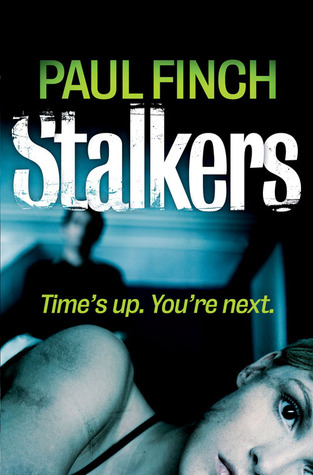
This is my review on Hellnotes of Stalkers by Paul Finch:
"Stalkers
By Paul Finch
Avon Books (HarperCollins)
ISBN: 978-0-00-749229-9
Paperback: 452 pages, £6.99
2013
Paul Finch’s name will be familiar to horror enthusiasts for his numerous short stories in The Black Books of Horror, or in his collections, Walkers in the Dark (Ash-Tree Press), Stains (Gray Friar Press), Groaning Shadows (Gray Friar Press), Enemies at the Door (Gray Friar Press) and his historical horror novels, Medi-Evil, volumes 1, 2 and 3.
This is his first mass market paperback, a crime thriller with more than a touch of horror. Indeed, some of the things that happen in Stalkers would not be out of place in any anthology of horror stories. This is real horror, though, the kind that not only can happen but, nightmarishly, does.
Stalkers introduces us to Detective Sergeant Mark “Heck” Heckenberg, late of Manchester, now stationed in London as part of the Serial Crime unit. An obsessive workaholic, Heck has convinced himself that the disappearance across Britain of over thirty successful, often professional, women with no reason to abandon their families, are connected. His superiors, though, are unconvinced. Almost burned out and in bad favour, Heck is forced to take three months leave. His boss, Detective Superintendent Gemma Piper, with whom he had a fling years ago, still has some faith in him and reluctantly agrees to let him use his leave as an opportunity to continue his investigations under deep cover. When he travels North to Salford to interview an ex-con who shared a prison cell with someone he thinks might have a connection with the disappearances, things suddenly start to get out of control. Unwittingly, rather than the lone predator he was expecting to uncover, Heck has stumbled on something far more dangerous, a professional gang, the “Nice Guys Club”, which will provide anyone perverted enough with whatever sexual thrills they want… for a price.
An ex-policeman, Finch’s description of police procedures are impeccable and add authenticity to the story as the violence notches up at an alarming rate. Struggling to stay within the boundaries to which he is expected to adhere as a serving policeman, Heck is gradually forced to go further than he would like, especially when it becomes obvious he can no longer rely on support from his colleagues, and has to go on the run for his life. The people he is up against are ruthless. Trained to kill, adept at torture, and merciless, they acknowledge no limits to what they are prepared to do to anyone who threatens them.
This is one of those novels which successfully blurs the boundaries between crime and horror and should satisfy enthusiasts of both. Finch has a grittily realistic, easy to read style. The pace is relentless. I found it hard to put down and, for all that Stalkers is over 400 pages long, it took me only a short time to get through it. Thankfully, another Heck novel, Sacrifice, the first chapters of which are included at the end as a taster, is due for publication in July.
From what I have read so far Heck will certainly become an iconic character.
Tuesday, 16 April 2013
The Tainted Earth by George Berguno

"THE TAINTED EARTH by George Berguno , Egaeus Press, ISBN: 978-0-957160620, 2012
This is the first time I have read any stories by George Berguno, although he has had two earlier collections, The Sons of Ishmael and The Exorcist’s Travelogue. Like Egaeus Press’s other books, it is beautifully printed and of superb quality.
There are eight short stories in this volume, plus a novella. The first is the title story and is written as a Nordic saga, though with modern sensibilities, particularly with regard to motivations and character and some subtle humour. More"
The River Through The Trees by David Peak

I reviewed this book on the BFS site:
"THE RIVER THROUGH THE TREES By David Peak, Blood Bound Books, March 2013; £6.40/£0.77 Kindle
Although this is not a long book it packs a heavy punch. Set in a small town in the American backwoods, which has been in steady decline for years, most of the characters are losers whose lives have been blighted by poverty, drug and alcohol abuse, and by ghosts from a past that has polluted everything around them. More"
Monday, 15 April 2013
The Whispering Horror by Eddy C. Bertin

This is my review of Eddy C. Bertin's collection of stories due from Shadow Publishing this May. The review is available on Hellnotes' website:
The Belgian writer Eddy C. Bertin’s stories have been appearing in anthologies since the late sixties, but this is his first English language collection. The title story, The Whispering Horror, originally appeared in The Ninth Pan Book of Horror Stories 1968. In Europe, though, under a number of pseudonyms, he has had over sixty pulp novels and serials, westerns, thrillers, and murder mysteries published. He has written mysteries and historical romances, and horror stories for children.
Here we have the cream of his tales, which range from the psychological to the supernatural. They even include the Cthulhu Mythos, though Bertin’s interpretation of this is distinctly his own.
One of my favourites must be The Whispering Horror, which was the first of his stories that I ever read many years ago. It has a dark, claustrophobic feel common to most of Bertin’s stories, and a shadowy horror which is malevolently evil. “And then… the thing WHISPERED. Not a moan or a groan, not a recognizable sound, but a thick, slimy whisper, which seemed to go on and on between the slippery walls. The whisper of something old and feeble, something slimy and swollen, which seemed dead and yet alive, as if it had just awakened from a long sleep. Something petrified and timeless, suddenly coming to itself.”
For me, excellent though the short stories are, my favourites are the longer ones. Dunwich Dreams, Dunwich Screams combines Lovecraft’s mythos with historical horror, blending the true events that befell England’s coastal town of the same name as Lovecraft’s blighted New England settlement. It interweavs two narratives, the holiday visit by a Belgian fan of Lovecraft, obviously Bertin himself, and the events that befell Dunwich during Henry VIII’s dissolution of the monasteries and his attacks against the clergy, including secret followers of Dagon. By contrast Something Small, Something Hungry follows a police investigation into a seemingly inexplicable series of fatal accidents at a circus. Even though no one else is ever involved with them – in one a trapeze artist closes her fists when she should have reached out to grasp the trapeze hurtling towards her and falls to her death – there are too many for them to be a coincidence. Told from a variety of viewpoints – the circus owner, a bestial clown, the policeman, and an old woman accused of being a witch – it soon becomes obvious that something none of them can see must be behind the accidents. The final twist, when the identity of the perpetrator is revealed, is even more shocking than anything that has gone before.
If one thing distinguishes Bertin’s stories, it’s the originality of their titles – A Taste of Rain and Darkness, Like Two White Spiders, The Man Who Collected Eyes, Whisper of Leathery Wings – but the final story, My Fingers Are Eating Me must rank as one of his most original. As in Dunwich Dreams, Dunwich Screams, the main protagonist is a visiting Belgian, a journalist on the lookout for unusual stories he can write for a magazine in Ghent about London in the early seventies. By accident he is witness to what he is at first certain is a mugging late one night on an all but deserted Underground station. Terrified at the savagery of the attack he flees to the surface, where he tries to tell the police, but when they return to the platform there is no trace of either a body or any of the blood he saw flowing from it. Unable to forget the incident, he travels the Underground obsessively until he finally sees the attacker again, a small beggar-like man who he starts to trail. At each revelation he discovers, he finds himself drawn into something much bigger and more terrifying than anything he could have possibly imagined, the cusp of an ancient Lovecraftian horror that encompasses the whole of the Underground. This story is a tour de force that never lets up, escalating in sheer horror up to the final twists in its climax.
A rich and varied collection of horror stories from a master of the genre. I sincerely hope that further collections of Bertin’s stories will appear in English in the not too distant future.
Subscribe to:
Comments (Atom)